Why AI Citation Tracking Matters for Brand Visibility in 2026
The Shift from Links to Mentions
For the better part of two decades, SEO revolved around backlinks. You built links, you ranked. But the rise of generative search has quietly rewritten that rulebook. When a user asks ChatGPT a question, the model doesn't show a list of blue links. It synthesizes an answer from multiple sources and sometimes names them. That mention - that citation - is now one of the most valuable signals for brand visibility. It is also one of the hardest to measure with traditional tools.
Enter AI citation tracking. This is not a rebrand of old backlink monitoring. It is a distinct practice: systematically finding where and how your brand appears inside the outputs of large language models, generative engines, and search generative experiences. If you manage brand presence for a company that relies on organic discovery, ignoring these citations means flying blind. The tools that do this well combine mention detection, natural language processing, and visibility scoring to give you a picture that goes far beyond what a standard rank tracker can provide.
What Exactly Is a Citation in the AI Era?
A citation in a generative answer is different from a hyperlink. When Perplexity AI cites a source, it often gives a numbered footnote that you can click. When ChatGPT cites a brand in a conversational answer, it might mention the company name without a link at all. Google Search, through its search generative experience, sometimes shows a small attribution near a paragraph. These are all citations, and they all carry weight for enterprise SEO teams who want to understand how their brand is being represented.
The value of a citation is twofold. First, it drives referral traffic when users click through. Second, and more importantly, it shapes brand perception. If your product is consistently cited as the authoritative source in a category, that builds trust with potential buyers. If a competitor is cited more often, you have a visibility problem that standard brand monitoring might never flag.
How AI Citation Tracking Works in Practice
Good AI citation tracking tools do not just scrape search results. They use natural language processing to parse the output of multiple generative engines, identify entity references, and score them for relevance and prominence. A mention buried in a long answer is less valuable than one that appears early. A mention that includes a positive sentiment is more valuable than a neutral one. Some platforms, including Authority Radar, assign a visibility score to each citation so you can compare your brand's presence against competitors at a glance.
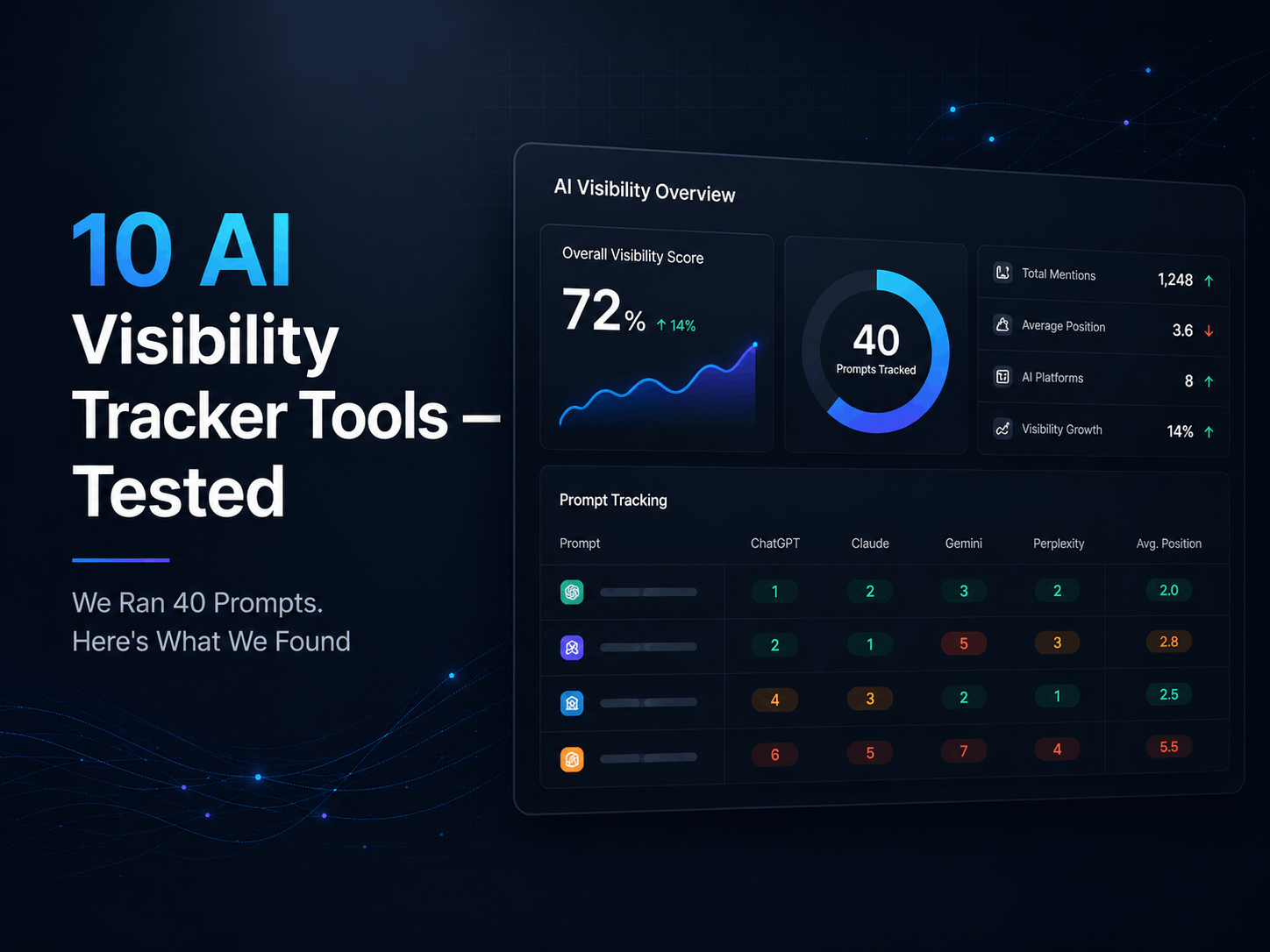
The process typically involves three steps. First, the tool defines a set of queries relevant to your industry and brand. Second, it sends those queries to multiple sources: ChatGPT, Perplexity AI, Bing's generative responses, and Google's search generative experience. Third, it analyzes the returned text for your brand name, product names, and related entities. The output is a dashboard where you can see trends over time, spot sudden drops in visibility, and identify which queries trigger your most valuable citations.
Why Traditional Rank Trackers Fall Short
If you rely solely on a rank tracker like Semrush or Ahrefs, you are seeing only part of the picture. Those tools are excellent for monitoring keyword positions in traditional Google Search results. But they were not built to parse conversational answers or to detect brand mentions in the middle of a paragraph generated by a large language model. A rank tracker can tell you that your site dropped from position three to position seven. It cannot tell you that ChatGPT started recommending a competitor's product instead of yours in a long-form answer.
This gap matters more every quarter. As generative engines become the default starting point for research queries, the old distinction between SEO and brand monitoring is fading. You need both. AI detection tools that focus on citation tracking fill that gap by combining the depth of enterprise SEO analysis with the breadth of social listening. They are not a replacement for Semrush or Ahrefs. They are a complement that addresses a blind spot in the modern search landscape.
The Role of Content Attribution and Competitor Analysis
One of the most practical uses of AI citation tracking is competitor analysis. You can see exactly which brands Perplexity AI cites for a given topic, and how often. You can compare your visibility score against a direct competitor across multiple queries. This gives you actionable intelligence: if a competitor dominates citations for a high-value query, you know where to focus your content strategy.
Content attribution becomes more precise as well. Instead of guessing which piece of content earned a mention, some tools can trace a citation back to the specific page or article that the model drew from. This is useful for enterprise SEO teams that produce large volumes of content and need to measure ROI beyond traditional traffic. If your article on a technical topic is consistently cited by Bing's generative answers, that is a signal that the content is authoritative and worth doubling down on.
Practical Considerations When Choosing a Tool
Not all AI citation tracking tools are created equal. Here are a few factors to weigh if you are evaluating options:
- Coverage breadth: Does the tool monitor ChatGPT, Perplexity AI, Bing, and Google's search generative experience? Each engine has a different user base and citation style.
- Mention detection quality: How well does the tool handle partial matches, synonyms, and abbreviations? Good natural language processing makes the difference between a useful alert and noise.
- Visibility scoring: A raw count of mentions is not enough. You need a score that accounts for prominence, sentiment, and relevance.
- Historical data: Can you see trends over weeks or months? A single snapshot is less useful than a trend line.
Tools like Brandwatch have long offered social listening, but they are now adding generative engine monitoring. Platforms built specifically for this use case, such as Authority Radar, focus entirely on AI visibility. The right choice depends on whether you want a broad brand monitoring suite or a specialized tool that integrates with your existing enterprise SEO stack.
How to Act on Citation Data
Collecting data is only half the battle. The real value comes from acting on it. If you notice that your brand's visibility score dropped after a model update, you can investigate which queries changed. If a competitor gains citations on Perplexity AI for a topic where you have strong content, you might need to update that content or build more authoritative links to it.
AI citation tracking also feeds directly into generative engine optimization. By analyzing which types of content get cited most often, you can tailor your writing to match the patterns that large language models favor. Structure, clarity, and authority matter more than keyword density. The same principles that make content rank well in Google Search often apply, but the emphasis shifts toward concise, well-sourced explanations that a model can easily reference.
The Bigger Picture: Brand Monitoring Meets Enterprise SEO
The separation between brand monitoring and enterprise SEO is artificial and fading. A brand's reputation online is now shaped as much by what a generative engine says as by what shows up in organic search results. If you manage a large brand, you need a unified view that includes both traditional search rankings and AI citations. This is not an either/or choice. It is a both/and reality.
AI citation tracking sits at the intersection of these disciplines. It uses mention detection to find your brand in places that standard crawlers miss. It applies natural language processing to understand context and sentiment. And it delivers a visibility score that helps you prioritize improvements. For teams that are already using tools like Ahrefs or Semrush for rank tracking, adding a citation tracking layer fills a critical gap without replacing what works.
Final Thoughts
If your team has not yet invested in AI citation tracking, this is the year to start. The generative search landscape is still young, but it is growing fast. Early adopters who learn to measure and optimize their AI citations will have a clear advantage as more users turn to ChatGPT, Perplexity AI, and other engines for answers. The tools are ready. The data is actionable. The only missing piece is the decision to treat citations as seriously as you treat backlinks.